


Figma to WordPress
Contents
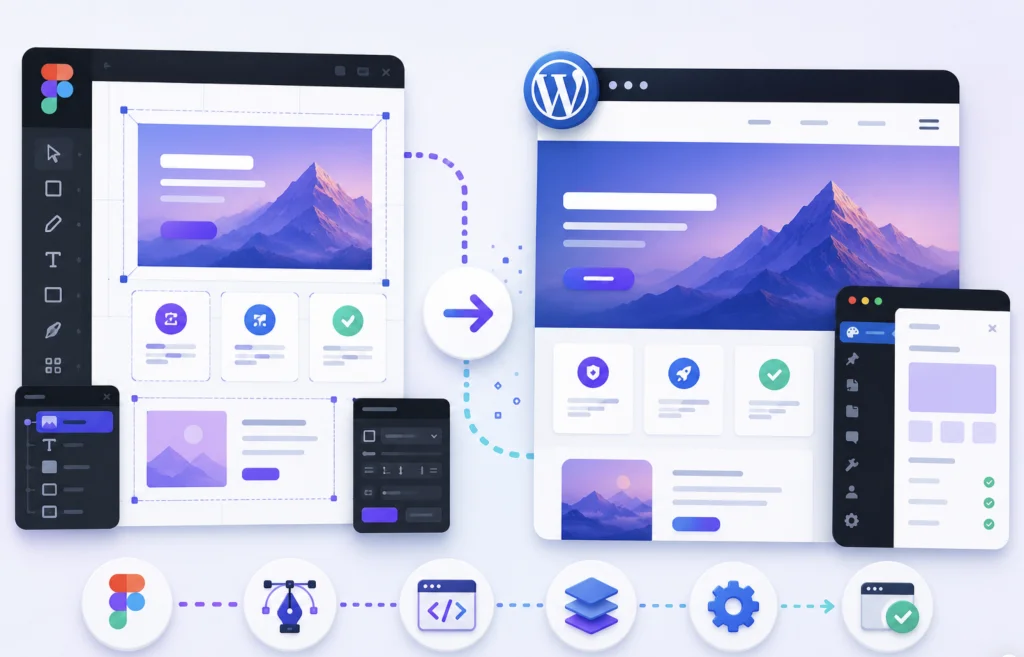
Converting graphic layouts into a functional WordPress CMS environment requires strict adherence to technical regulations and coding standards. Professional Figma conversion ensures not only visual fidelity but also a robust foundation for search engine optimization and business logic scalability.
WOP lab: Pixel Perfect Development Standards
Visual precision is a priority during design integration. The application of Pixel Perfect methodology guarantees 100% alignment between the final website and the source layouts. The development process accounts for all element states, typography, grids, and line spacing, eliminating interface distortion across various devices and screen resolutions.
Technical Precision in Layout Implementation
Manual coding within WOP lab standards avoids the use of heavy visual builders that compromise resource performance. Instead, a clean architecture is applied, where every element is optimized for specific project tasks. This approach transforms complex graphic design into a lightweight, high-performance software product.
Clean Code and Performance in WOP lab
The development tech stack is based on the latest versions of PHP 8+, HTML5, and CSS3. Eliminating redundant libraries and third-party plugins ensures high scores in Google PageSpeed Insights and stable passing of Core Web Vitals tests. This directly impacts search engine ranking and reduces customer acquisition costs.
A comparison of project implementation methods demonstrates a critical difference in long-term efficiency and resource stability:
| Parameter | Automated Conversion | Development in WOP lab |
| Loading Speed | Low (bloated code) | Maximum (optimized PHP) |
| SEO Readiness | Minimal | Full semantic markup |
| Security | Plugin vulnerabilities | Closed custom architecture |
| Scalability | Limited by template | Unlimited |
Choosing custom development minimizes technical risks and guarantees high conversion through flawless performance.
Core Web Vitals Optimization for SEO
Every stage of project assembly is accompanied by a performance audit. Minification of CSS/JS files and image processing optimization allow for instantaneous interface response, which is critical for user retention and improving behavioral factors.
Scalable Solutions from WOP lab
Integrating Figma layouts into WordPress involves implementing flexible content management tools. Using Advanced Custom Fields (ACF) and custom Gutenberg blocks allows for editing any part of the site without the risk of breaking the layout. This simplifies administration and reduces business dependence on technical specialists when updating information.
Integration of Custom Fields and Gutenberg Blocks
Site architecture is designed with future growth in mind. The ability to connect e-commerce modules, booking systems, or client portals is established during the database structure formation. This approach ensures the longevity of development investments.
Frequently Asked Questions
How is alignment with the Figma layout ensured?
Quality control includes an Overlay Testing phase, where a semi-transparent layout is superimposed on the finished frontend. This confirms compliance with all paddings, font sizes, and proportions set by the designer.
Does Figma conversion affect SEO metrics?
The application of semantic markup and header hierarchy optimization during the coding process creates a favorable environment for indexing. Clean code accelerates page crawling by search engine bots.
Is it possible to edit content independently after project delivery?
An intuitive admin panel, configured for specific project tasks, allows for changing texts, images, and blocks without programming skills.
Professional Figma to WordPress conversion by WOP lab ensures technological superiority and the stable operation of your business resource.


