


Comprehensive Digital Product Design and Development
Contents
Modern product design is a multidisciplinary process that integrates business analytics, user experience engineering, and technical implementation. In a highly competitive market, creating a viable IT solution requires deep expertise at every stage of the development lifecycle. WOP lab provides a systemic approach to engineering, transforming business ideas into high-performance digital interfaces.
WOP lab: Product Design as a Business Tool
Effective product design extends beyond visual aesthetics, focusing on achieving specific commercial metrics and satisfying the needs of the target audience. At WOP lab, the engineering process begins with a deep dive into business logic, which minimizes risks during the programming phase.
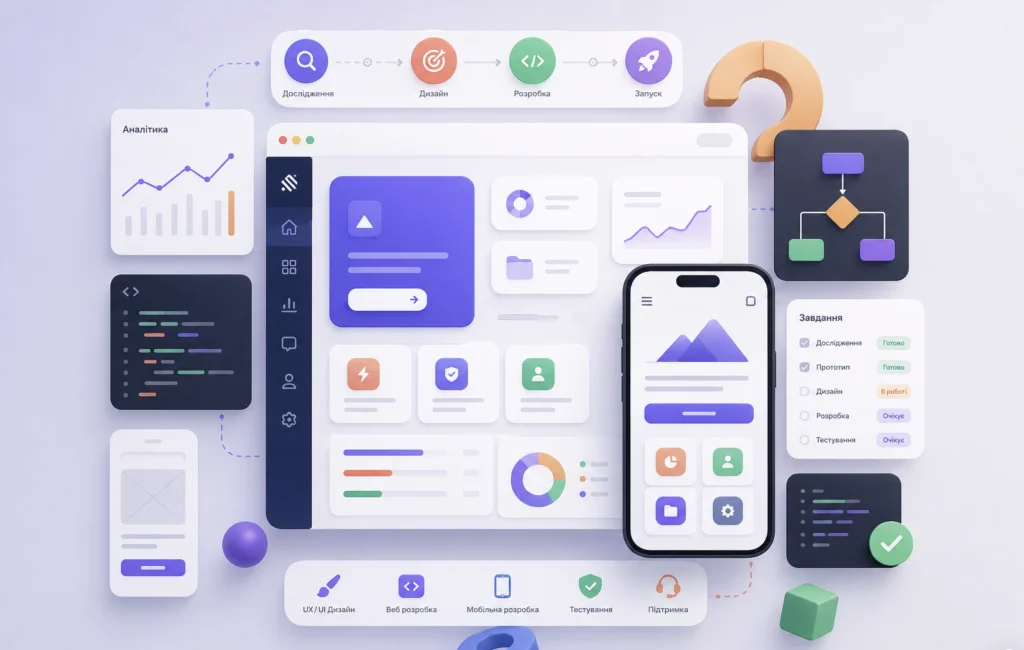
The following key components form the foundation of a successful interface solution:
- User Experience (UX) Engineering — creating logical structures and navigation paths that ensure intuitive interaction.
- Visual Strategy (UI) — developing a graphic language that communicates brand values and increases product recognition.
- Information Architecture — systematizing data to provide rapid access to key system functions.
- Prototyping — creating interactive models for preliminary testing of hypotheses and mechanics.
This framework allows for structuring work on projects of any complexity, ensuring predictable results and high-quality execution. Systematic processing of each component guarantees the creation of a product ready for scaling and integration into an existing business ecosystem.
Product Development at WOP lab: From Idea to Release
Professional product development is based on an iterative approach and constant hypothesis testing. Utilizing a Discovery Phase methodology allows for a detailed study of the market and competitive environment before any code is written. Investing in the analytical stage at the start of a project serves as a guarantee that the final solution will meet user expectations and technical business requirements.
A comparison of the engineering stages is provided in the following table:
| Development Stage | Primary Objective | Business Outcome |
| Discovery Phase | Analysis of requirements and risks | Technical specification and project plan |
| MVP Creation | Launch of core functionality | Rapid verification of market hypotheses |
| Scaling | Integration of new features | Growth of user base and profitability |
| Technical Support | Operational stability | High customer retention levels |
The table above demonstrates the sequence of actions necessary for a systematic rollout of an IT solution to the market. A clear division into stages allows for budget and timeline control, ensuring transparency in the interaction between the client and the executors.
Professional Product Design from WOP lab
The technology stack and architectural solutions determine the longevity and flexibility of a digital platform. WOP lab places special emphasis on selecting tools that support high loads and enable the implementation of innovations, such as AI integration and process automation. Thorough technical preparation during the planning stage eliminates the need for large-scale reworks in the future, turning preparation time into a guarantee of system stability.
Product design and subsequent product development within a single agency ecosystem ensure a seamless transition from mockups to production. This eliminates loss of quality and guarantees that the final interface fully corresponds to the approved prototypes.
FAQ
What is the difference between product design and UX/UI design?
UX/UI design focuses primarily on the convenience and appearance of the interface. Product design encompasses a broader range of tasks, including business strategy, market analysis, searching for Product-Market Fit, and the long-term evolution of the project.
How long does it take to create an MVP at WOP lab?
The timeline for developing a Minimum Viable Product depends on the complexity of the functionality; however, a standard cycle takes between 2 to 4 months. An iterative approach allows for the release of the first version as quickly as possible to gather feedback from real users.
How does product design impact conversion and business revenue?
Competent engineering removes barriers on the user’s path to a purchase or target action. Optimizing an interface based on usability testing data correlates directly with increased conversion rates, lower customer acquisition costs, and improved audience loyalty.
The expertise of WOP lab in engineering and implementing complex IT systems allows for the transformation of technological challenges into sustainable competitive advantages.


