


Design System Development
Contents
Systematizing interface solutions is a critical stage in the evolution of a modern digital product. Design system development ensures visual unity and technological integrity, transforming fragmented layouts into a scalable business asset.
WOP lab: Design Systems as a Capitalization Tool
Implementing a design systems methodology allows for the transformation of interface production from a craft into an industrial process. Professional system design eliminates code duplication and minimizes the likelihood of errors during product scaling. Capital investment in creating a unified visual language pays off through a radical reduction in operational costs for software maintenance and development.
The comparison of efficiency between traditional design and a systemic approach is presented in the table below:
| Efficiency Parameter | Traditional UI Kit | Design System by WOP lab |
| Time-to-Market | Medium (depends on rendering) | High (assembly from ready components) |
| Technical Debt | Accumulates with every update | Decreases through code reuse |
| Consistency | Disrupted as the team grows | 100% maintained across all modules |
| Maintenance Cost | Grows exponentially | Optimized and predictable |
These metrics confirm that design systems are the foundation for a company’s long-term technological leadership in the market.
Design System in WOP lab: Technological Foundation
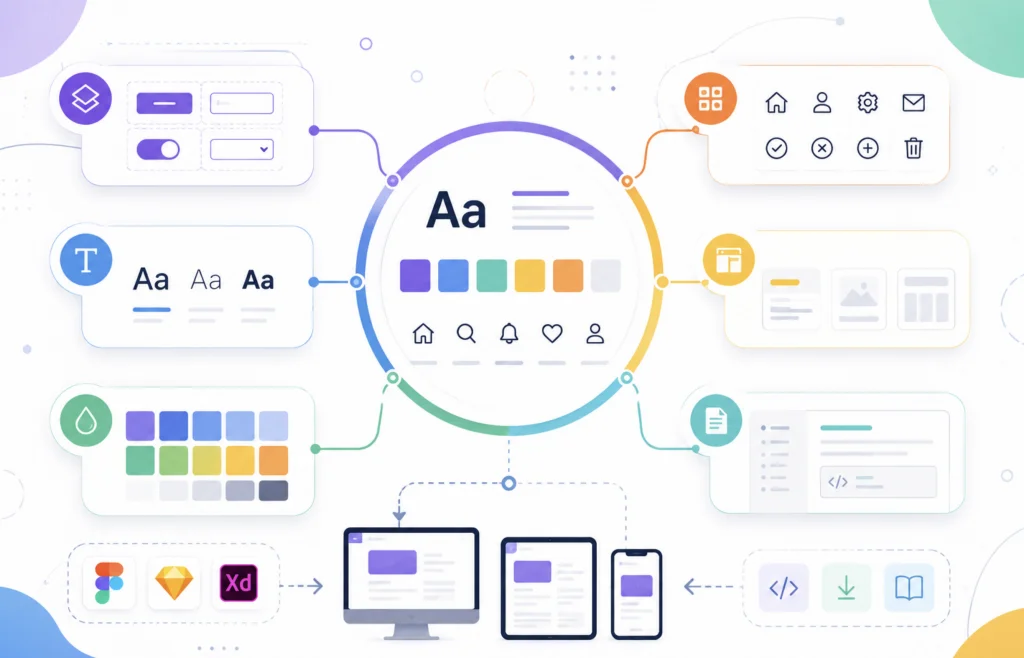
Interface logic design is based on atomic design principles, where every element—from a button to a complex form—is part of a single ecosystem. A design system in figma by WOP lab specialists includes not only visual styles but also deeply developed interaction logic recorded in documentation.
The following key components form the architecture of a reliable product:
- Design Tokens (variables for color, typography, and spacing for code synchronization);
- Interactive Component Library with configured states (Hover, Active, Disabled);
- Grids and Responsiveness Rules for correct display on any device;
- Documentation and Guidelines on user behavior patterns.
The integration of these elements guarantees high speed for new screen assembly and simplifies the onboarding of new members into the development team.
Creating a Design System by WOP lab for Complex Products
Special attention is paid to the Enterprise solutions segment, where crm system design requires processing vast amounts of data. Design system development for internal corporate products aims to increase employee productivity and reduce cognitive load. Creating a design system in this context involves developing complex analytical dashboards, tables, and forms that operate under unified rules.
The implementation process includes the following stages:
- Deep Audit of current interface solutions and pattern identification.
- Visual Strategy Formation and basic brand constants.
- Library Assembly and setting up connections between design and frontend development.
- Process Implementation for updates and maintaining system relevance.
Meticulous development of each stage eliminates visual chaos and guarantees predictable results.
Frequently Asked Questions
What is the difference between a design system and a standard UI kit?
A UI kit is a static set of elements, while a full system includes interaction rules, documentation, and “live” components in code, ensuring a continuous link between design and development.
Why is a design system necessary for CRM with complex logic?
In complex management systems (CRM/ERP), a design system acts as a guarantor that the user will not get lost in the interface, while developers can instantly deploy new modules without rewriting base styles.
How is the system supported after handoff to the client?
The architecture of solutions from WOP lab allows for easy scaling; if necessary, agency specialists perform scheduled library updates and audits of new feature compliance with the general system rules.
Implementing a design system by WOP lab experts ensures technological leadership and sustainable development of the digital product.


