


UX Audit
Contents
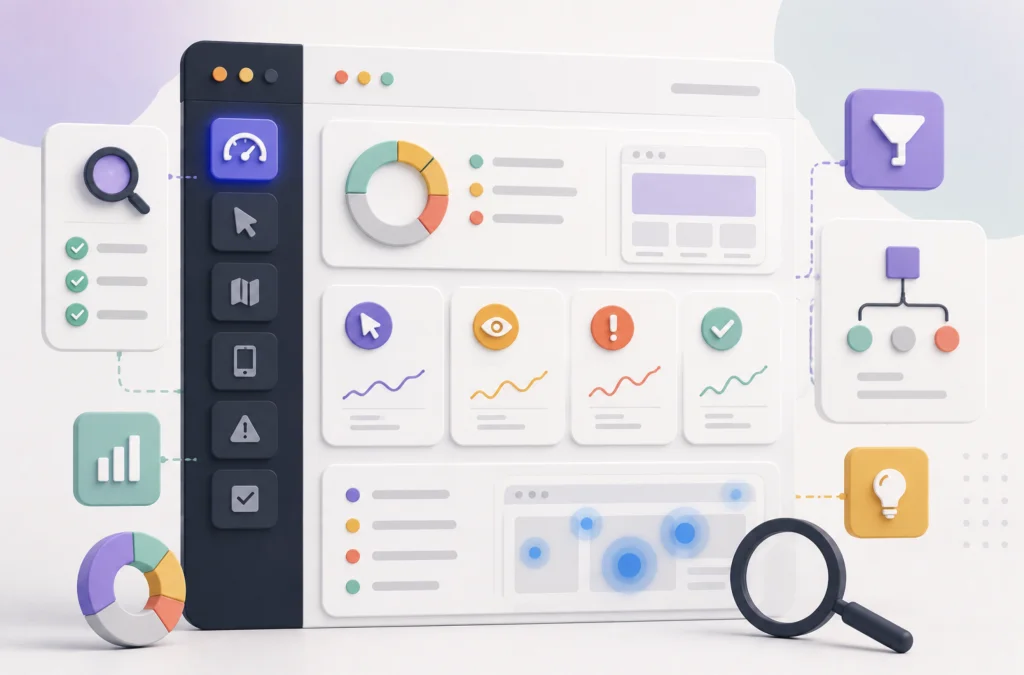
A professional ux audit is a comprehensive diagnostic process aimed at identifying interface barriers that hinder business growth. This procedure transforms subjective design opinions into objective data, ensuring a high return on investment (ROI) and a strategic market advantage.
WOP lab: UX Audit as a Business Performance Optimization Tool
An effective website ux audit correlates directly with conversion rate indicators. A systematic analysis of user behavior allows for the elimination of friction points, leading to a reduction in customer acquisition cost (CAC). Implementing audit results from WOP lab ensures a reduction in technical debt and optimizes the development roadmap by excluding non-target costs for implementing redundant features.
The following comparison of product analysis approaches confirms the effectiveness of the integrated methodology:
| Analysis Method | Object of Research | Resulting Value |
| Heuristic Evaluation | Compliance with usability standards | List of critical interface issues |
| Quantitative Analysis | GA4 and Mixpanel data | Statistical confirmation of barriers |
| Heatmap Analysis | Attention distribution | Visual hierarchy optimization |
| CJM Audit | Full user journey | Elimination of logical gaps in scenarios |
This methodology provides a 360-degree product overview, turning fragmented metrics into a clear action plan for the development team.
Website UX Audit in WOP lab: Methodology and Analytical Tools
The research process is based on a synthesis of expert assessment and instrumental control data. UX audit basics include checking the interface for compliance with Nielsen’s 10 heuristics, which guarantees adherence to global accessibility and usability standards. Utilizing specialized ux audit services allows for the recording of real interaction patterns that are often ignored during standard design.
Key stages of the analytical work include:
- Sales funnel analysis and identification of stages with the highest drop-off rates;
- Hypothesis testing through session replays and click maps;
- Assessment of cognitive load on the user during target actions;
- Formation of a prioritized backlog of changes based on their impact on profit.
A systematic approach ensures that every interface change is justified by target audience needs and corporate business goals.
SaaS UX Design from WOP lab: Specifics of Complex Service Audits
In the saas ux design segment, the audit focuses on long-term metrics such as Retention Rate and Churn Rate. Specialized ux saas analysis identifies barriers in onboarding processes, which is critical for reducing Time-to-Value for new users. Optimizing complex dashboards and data management systems increases customer loyalty and grows the lifetime value (LTV) of each subscriber.
Professional ux audit services for SaaS include:
- Evaluation of workspace ergonomics and data visualization;
- Audit of multi-level access systems and role management;
- Analysis of interface scalability when adding new functional modules.
Eliminating interface chaos in complex systems serves as the foundation for stable subscription model growth and maintaining leadership positions in the niche.
Frequently Asked Questions
What is the difference between a UX audit and a standard redesign?
Unlike a visual update, an audit is based on deep analytics and behavioral research, providing a foundation for changes that lead to measurable KPI growth rather than just aesthetic improvements.
What services are used to conduct a UX audit?
Professional ux audit services involve the use of Google Analytics 4, Hotjar, Microsoft Clarity, and Figma prototyping tools to record and verify hypotheses.
How often should a SaaS product audit be conducted?
A regular audit is recommended before launching major updates, after significant traffic growth, or upon detecting stagnation in key conversion and retention metrics.
Conducting a professional UX audit with WOP lab specialists guarantees the transformation of a product into a high-performance business tool with a predictable development trajectory.


